A Meta-Analiz: The Etki of Beyin-bilgisayar arayüzü(BCI) Açık Üst ekstremite Rehabilitasyon after Inme - Inme Merkez
Giriş
Motor rehabilitasyon after inme is now Hızlı-growing, driven by other technological fields such as Sanal and augmented reality (VR/AR), robotics, and invasive and non-invasive beyin-bilgisayar arayüzü (BCI). BCI can provide Gerçek zamanlı sensory Geri bildirim of EEG activity, enabling inme Hastalar to regulate their sensorimotor rhythms consciously. In typical noninvasive, EEG-Temelli BCI, the Kullanıcı's motor Niyet (motor imagery or execution) is decoded from the Beyin's electrical activity in Gerçek zamanlı by extracting relevant Özellikler. The detection of Hareket Niyet by BCI will trigger the corresponding sensory Geri bildirim to the Kullanıcı. This Geri bildirim can be in abstract Form (such as a cursor moving Açık a computer screen) or in the Form of concrete Geri bildirim (such as a visual representation of a participant's body Parçalar Açık a Sanal avatar, or superimposed directly Açık a participant physically) or somatosensory delivery via Robotik, tactile, or nöromüsküler electrical Uyarı (NMES) Sistemler to reproduce intended movements, which has been shown to enhance motor learning.
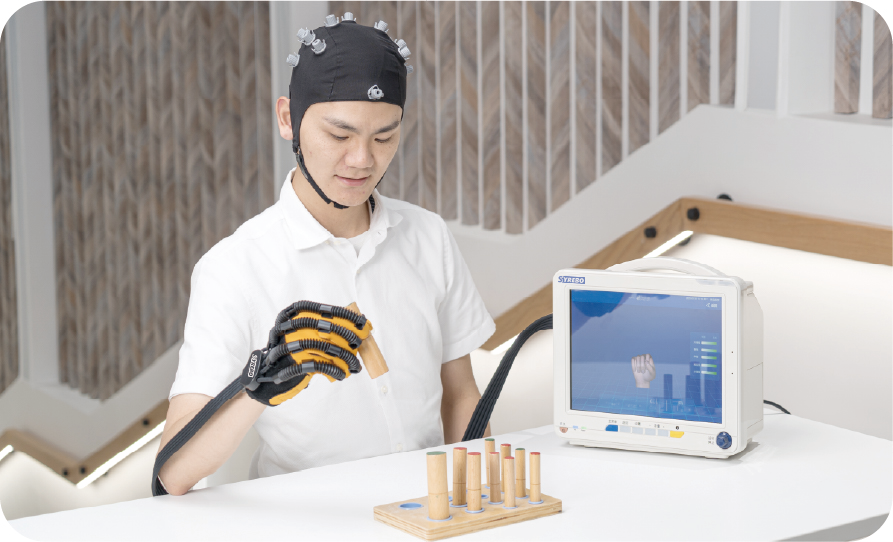
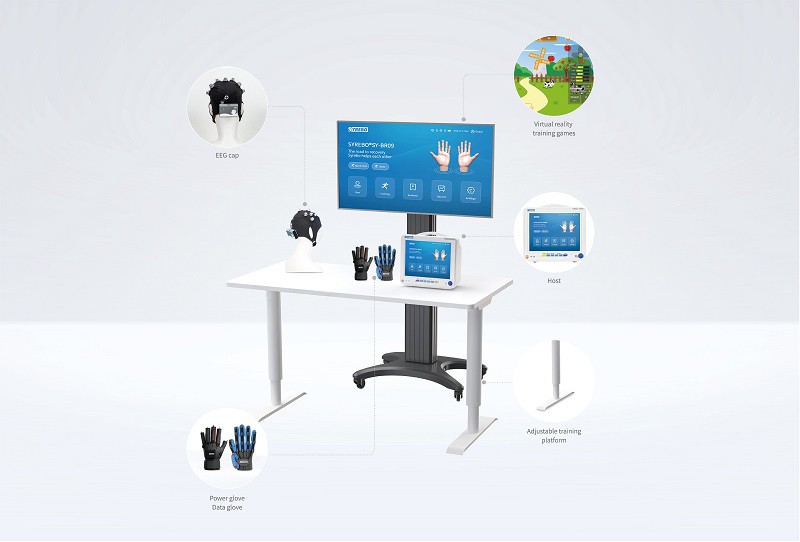
The beyin-bilgisayar arayüzü has begun to be used in rehabilitasyon after inme. It aims to promote nöropastisite by adjusting or self-regulating neurophysiological activities, thereby improving the Etki of rehabilitasyon. However, there are still uncertainties about its actual Klinik Etkililik. This article aims to Nicelendirmek the Etkinlik of BCI Eğitim in üst ekstremite rehabilitasyon after inme by conducting a meta-Analiz of existing randomized controlled Denemeler (RCTs). Changes in motor function at the beginning and Son of the intervention were reported in these RCTs. The investigators reviewed available Raporlar from all RCTs using these techniques. They provided pre- and Pozisyon-intervention dyskinesia scores for the experimental and control groups, which included Standart Terapi, Robotik Terapi, electrical Uyarı, and motor imagery without BCI.
Methods
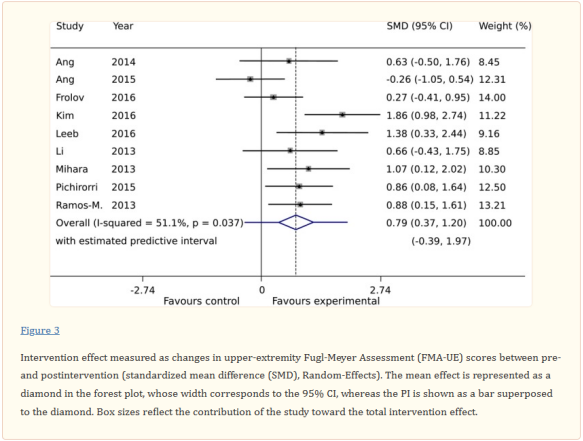
MEDLINE, CENTRAL, PEDro, and other databases were used, and the literature was screened by checking the references of multiple İnceleme articles. Randomized controlled Denemeler using BCI for Pozisyon-inme motor rehabilitasyon were selected, and motor disorder scores before and after intervention were provided. Özet Etki sizes were calculated using the random-effects inverse variance Yöntem. Initially, 524 articles were found, and after removing duplicates, the titles and abstracts of 473 articles were screened. Finally, 26 articles corresponding to BCI Klinik Denemeler were found, of which 9 Çalışmalar involving a Toplam of 235 inme survivors met the inclusion Kriterler for meta-Analiz (randomized controlled Denemeler with motor Performans as the Sonuç Dizin).
Sonuçlar
In 6 BCI Çalışmalar, motor Gelişme, mainly quantified by upper extremity Fugl-Meyer Değerlendirme (FMA-UE), exceeded the minimal clinically Önemli Fark (MCID=5.25), while this Gelişme was achieved in only 3 control groups. Overall, the standardized mean Fark between BCI Eğitim and FMA-UE compared with the control Durum was 0.79 (95% CI: 0.37 to 1.20), within the Aralık of moderate to large pooled Etki sizes. Furthermore, several Çalışmalar have shown that BCI induces functional and structural nöropastisite at subclinical levels.
Conclusions
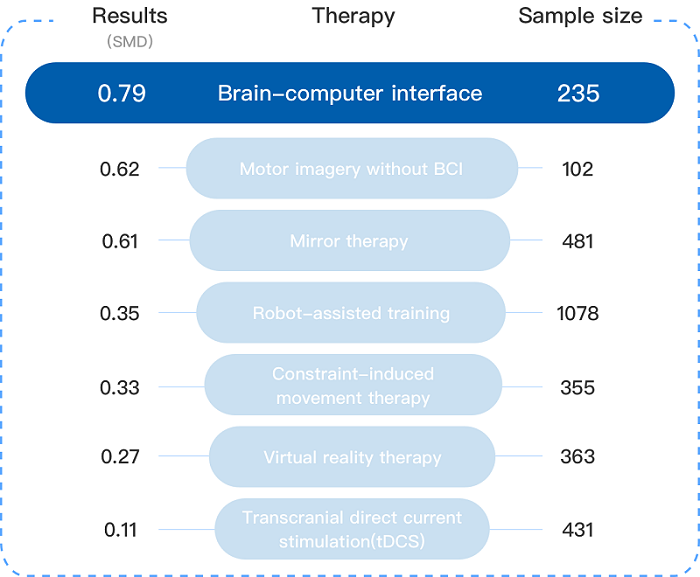
Beyin-bilgisayar arayüzü-Temelli neurorehabilitasyon shows moderate to large Etki Boyut Açık üst ekstremite motor function, which is superior to conventional rehabilitasyon treatments such as motor imagery, ayna terapisi, Robot-assisted Eğitim, constraint-induced Hareket Terapi, Sanal reality Terapi, and tDCS. In addition to motor Sonuçlar, several Çalışmalar have reported subclinical levels of functional and structural nöropastisite induced by BCI, some of which correlate with İyileştirilmiş motor Sonuçlar. More Çalışmalar with larger Örnek sizes are needed to improve the Güvenilirlik of these Sonuçlar.
Reference: Cervera MA, Soekadar SR, Ushiba J, et al. Beyin-bilgisayar arayüzüs for Pozisyon-inme motor rehabilitasyon: a meta-Analiz. Ann Clin Transl Neurol. 2018 Mar 25;5(5):651-663.